
Sparx Solutions
Software Architecture Modelling with Sparx Systems Enterprise Architect
Model software architecture in a shared Sparx EA repository, connecting UML design views, source code context, requirements, and review-ready documentation.

Turn Software Architecture into a Shared Model
As software systems grow across applications, services, integrations, and release cycles, Malaysian technology teams need a clearer way to maintain architecture knowledge beyond slides, meetings, and individual expertise.
Architecture in Slides
Informal diagrams can become outdated as systems evolve through multiple releases.
Knowledge Held by Few
Architecture knowledge often depends on a few senior engineers or technical leads.
Code and Design Drift
The implemented system can move away from the intended architecture over time.
Reviews Need Rework
Architecture reviews often require separate diagrams, summaries, and explanations.
With Sparx Systems Enterprise Architect (EA Sparx), software architecture teams can maintain UML design views, component structures, interfaces, deployment views, and source code context in one connected model. This helps teams understand how design decisions relate to requirements, implementation, and future change.
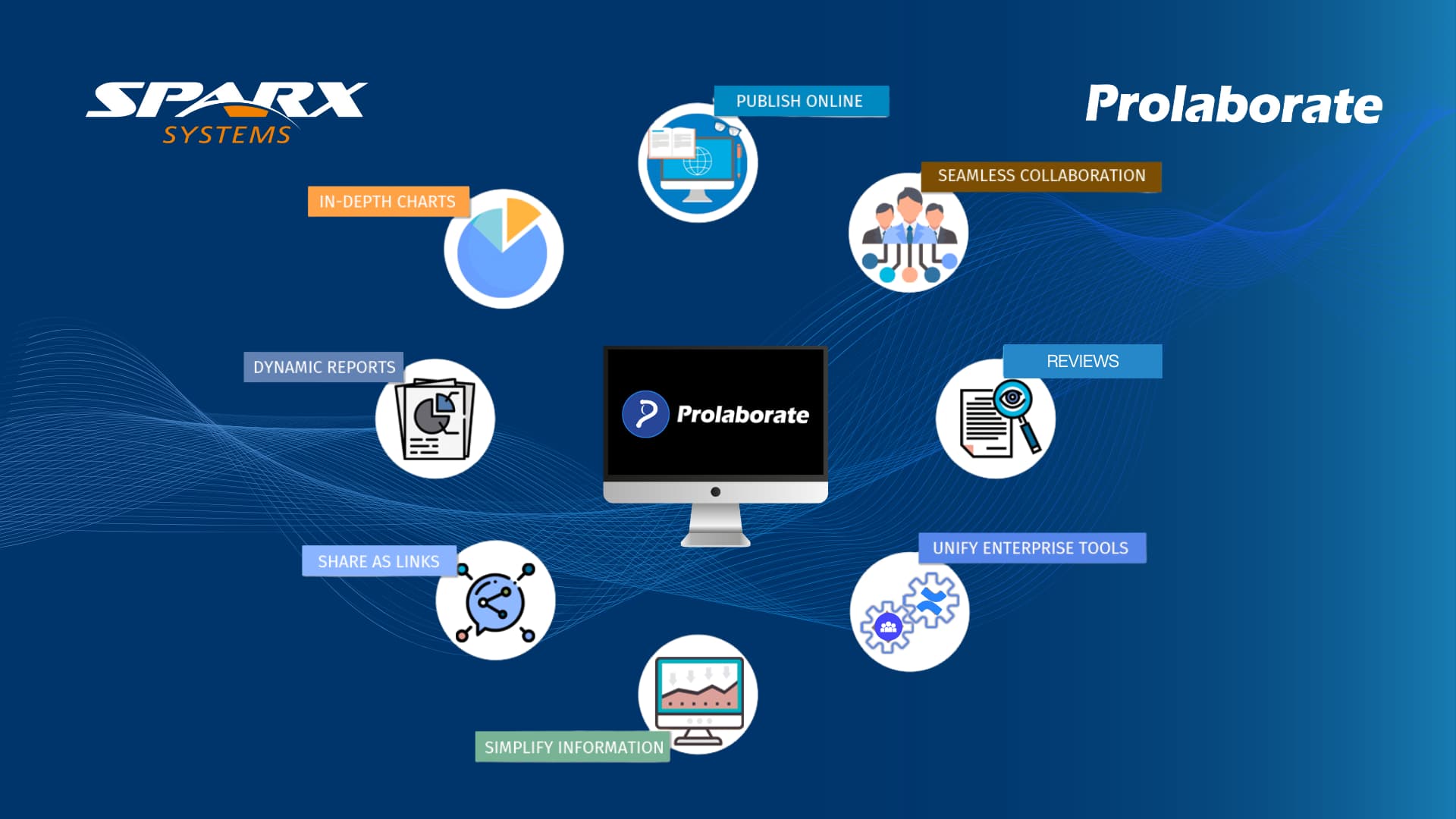
For Malaysian organisations managing software platforms, financial systems, digital services, enterprise applications, or integration-heavy environments, this means less dependency on static slide decks and more confidence working from a shared architecture repository. Pro Cloud Server supports secure repository access, while Prolaborate helps product owners, delivery leads, and governance stakeholders review selected architecture views in a more accessible way.
A Practical UML Modelling Approach with Sparx Systems
Sparx Systems Enterprise Architect keeps software architecture models connected, while Prolaborate helps make selected views easier for wider teams to review and discuss.
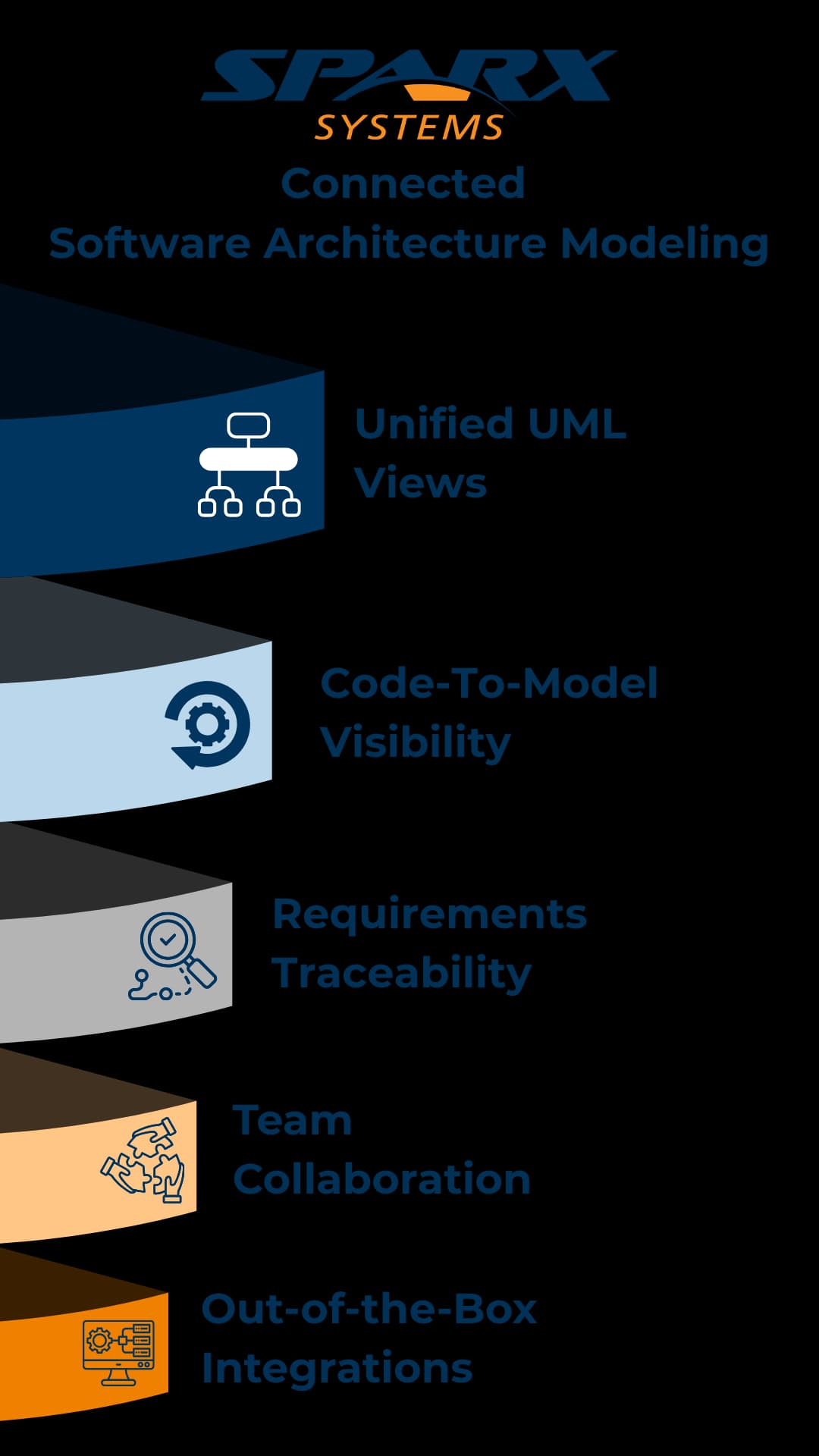
UML Architecture Views in One Model
Model components, classes, interfaces, behaviour, interactions, and deployment views in a shared UML environment.
Code-to-Model Visibility
Reverse-engineer source code into UML models and keep design views closer to the implemented system.
Traceability from Requirements to Design
Connect requirements, use cases, architecture elements, and implementation context for clearer impact review.
Stakeholder Collaboration with Prolaborate
Share selected architecture views through Prolaborate so product, delivery, and governance teams can discuss design context together.
Repository Access and Toolchain Integration
Support secure repository access and OSLC-based integration where architecture model information needs to connect with wider development environments.
Sparx Systems Platform Capabilities for Software Architecture Modelling
The Sparx Systems Platform supports software architecture teams by combining UML modelling depth, code engineering, traceability, documentation, stakeholder review, and toolchain integration. These capabilities help teams maintain architecture knowledge as a reusable, reviewable, and connected asset.
Model Software Architecture with UML in Sparx Enterprise Architect
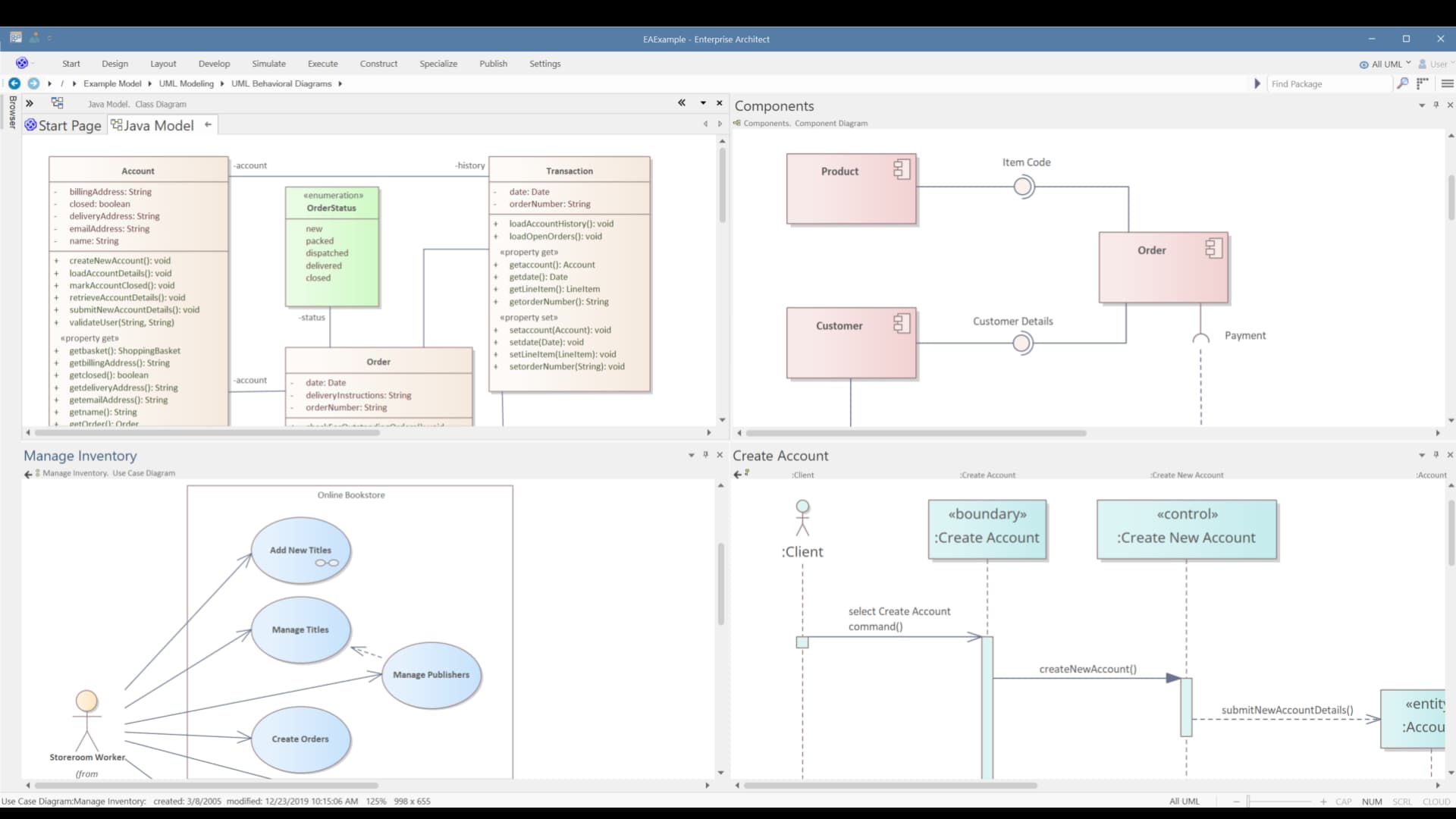
- Create UML architecture views using diagrams such as class, component, sequence, activity, state machine, composite structure, and deployment diagrams.
- Use Sparx Enterprise Architect’s repository-based modelling approach so elements can appear across multiple diagrams and remain connected.
- Maintain structural and behavioural views together to describe how software components are organised, interact, and are deployed.
Connect Architecture Models with Source Code and IDE Workflows
- Reverse-engineer source code into UML models to understand the structure of existing software systems.
- Generate and synchronise source code from UML models across supported programming languages such as C++, C#, Java, Python, PHP, and Visual Basic.
- Use MDG Integration for Visual Studio or Eclipse where teams need Sparx EA modelling and code engineering closer to the developer IDE.

Trace Requirements, Components, & Design Decisions
- Link requirements and use cases to software architecture elements to show why design decisions exist.
- Use traceability views and matrix-based analysis to understand relationships across requirements, classes, components, and interfaces.
- Support change impact review when requirements, interfaces, or implementation structures evolve.

Generate Architecture Documentation from the Model
- Generate structured documentation from Sparx Enterprise Architect (ea sparx) model content for architecture reviews and governance needs.
- Include diagrams, element information, relationships, and design context directly from the repository.
- Reduce the effort of maintaining separate architecture documents that drift away from the current model.

Share and Review Architecture Models Securely
- Use Prolaborate to present selected architecture views, dashboards, and model reviews for non-modelling stakeholders.
- Enable secure discussion and review around Enterprise Architect model content for product, delivery, and governance teams.
- Use OSLC RESTful API capabilities where architecture information needs to connect with wider development or lifecycle environments.