

How to Make Better Decisions with Sparx Systems Enterprise Architect Models?
Every application you model, requirement you connect and design decision you record adds to your organisation’s architecture knowledge. Sparx Systems Enterprise Architect gives that knowledge a shared structure your team can continue to build on.
The value of that knowledge becomes even clearer when it can support the decisions your organisation needs to make. Whether you are reviewing an application portfolio, assessing the impact of change or bringing architecture information into a stakeholder discussion, the usefulness of the model depends on how easily the right people can find, understand and work with the information they need.
As your architecture practice develops, there are opportunities to make that knowledge easier to explore, easier to present and easier to use across a wider group of stakeholders.
Getting more from Sparx EA starts by identifying the decision, review or discussion you want your architecture knowledge to support.
Start with the Decision that Matters
An architect might want to explore an application portfolio in preparation for a review. A business leader may want a focused view of the applications supporting a capability. A growing practice may want to bring modelling and stakeholder participation into a coordinated environment.
Complete this sentence with your team:
We need our architecture knowledge to help us decide…
Keep the outcome specific enough to demonstrate. For example, “Which applications should we review because they support this capability?” gives the team a clearer basis for deciding what information needs to be easier to explore, present or share.
Get More Value from Your Enterprise Architect Environment
If your organisation is looking to improve how Sparx EA supports architecture, our consulting team can help you assess the current environment and identify practical areas to develop next.
Make Architecture Knowledge Easier to Explore
As your architecture repository grows, finding the right information can become more dependent on knowing how the model is structured, where information is located and how different elements are connected.
This can make even straightforward questions take longer to answer, particularly when someone needs to move from a business question to the relevant architecture context quickly. The challenge is not necessarily a lack of information, but how easily that information can be discovered and understood.
A more accessible way to explore architecture knowledge can help teams move from a question to relevant model context more efficiently. When users can begin with what they want to understand and then follow the supporting information, discussions can become more focused and decisions can move forward with greater context.
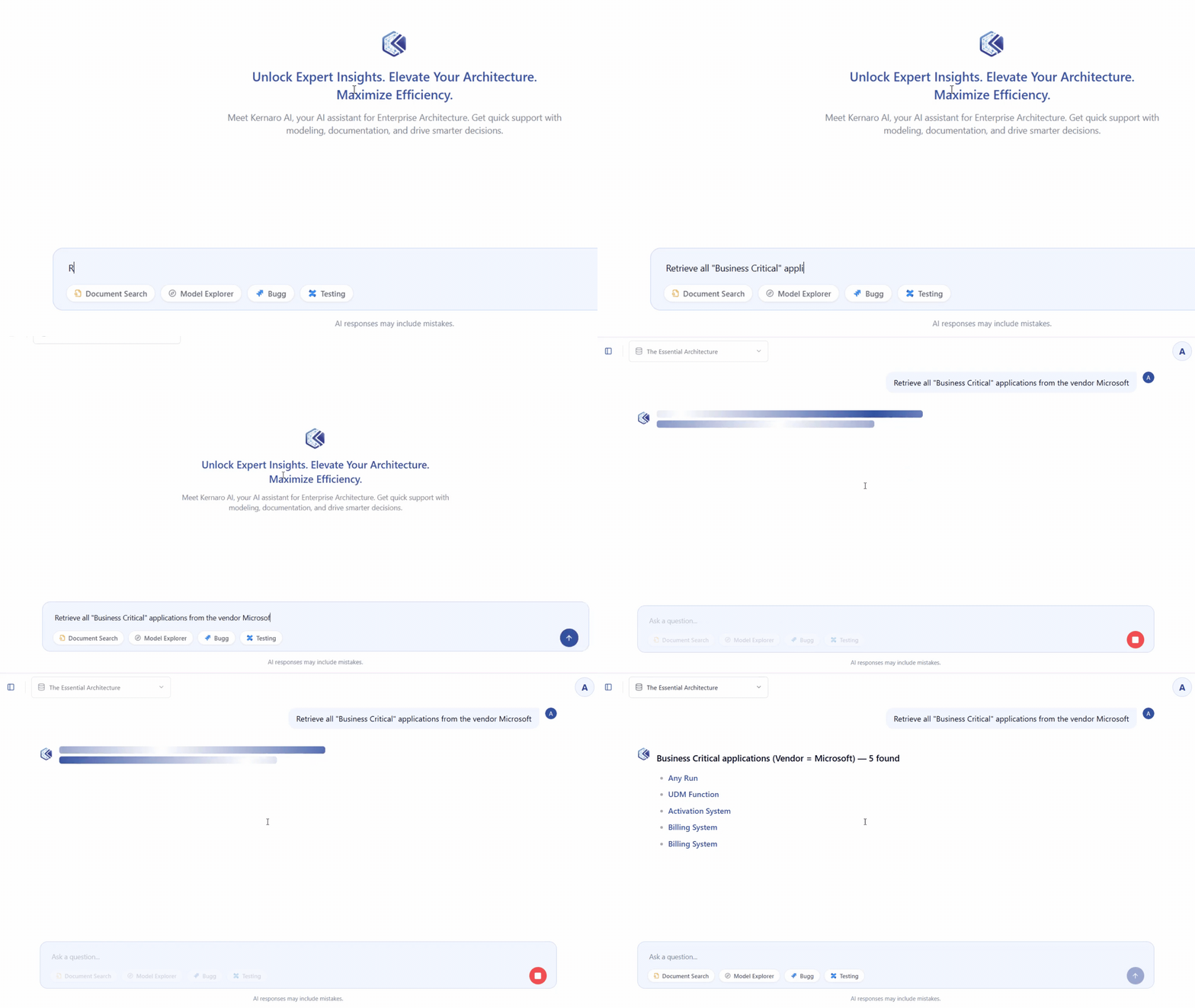
Using Kernaro Model Chat to identify business-critical applications from Sparx Enterprise Architect model data.
Kernaro AI extends the way teams can interact with their Enterprise Architect knowledge, helping users explore and work with model information more naturally while keeping the underlying architecture context connected.
Give Stakeholders a Focused View
The same architecture repository may need to support very different audiences. An application owner may need ownership and dependency information, while a programme team may need to understand the applications affected by a change and a business leader may need a focused capability-level view.
When everyone has to work from the same detailed modelling environment or depend on repeated explanations and exports, architecture information can become harder to bring into everyday planning and review discussions.
A more focused experience can help each audience work with the information most relevant to its role. Giving stakeholders a clearer view of the architecture context behind a decision can make reviews more productive and help discussions remain centred on the information being considered.
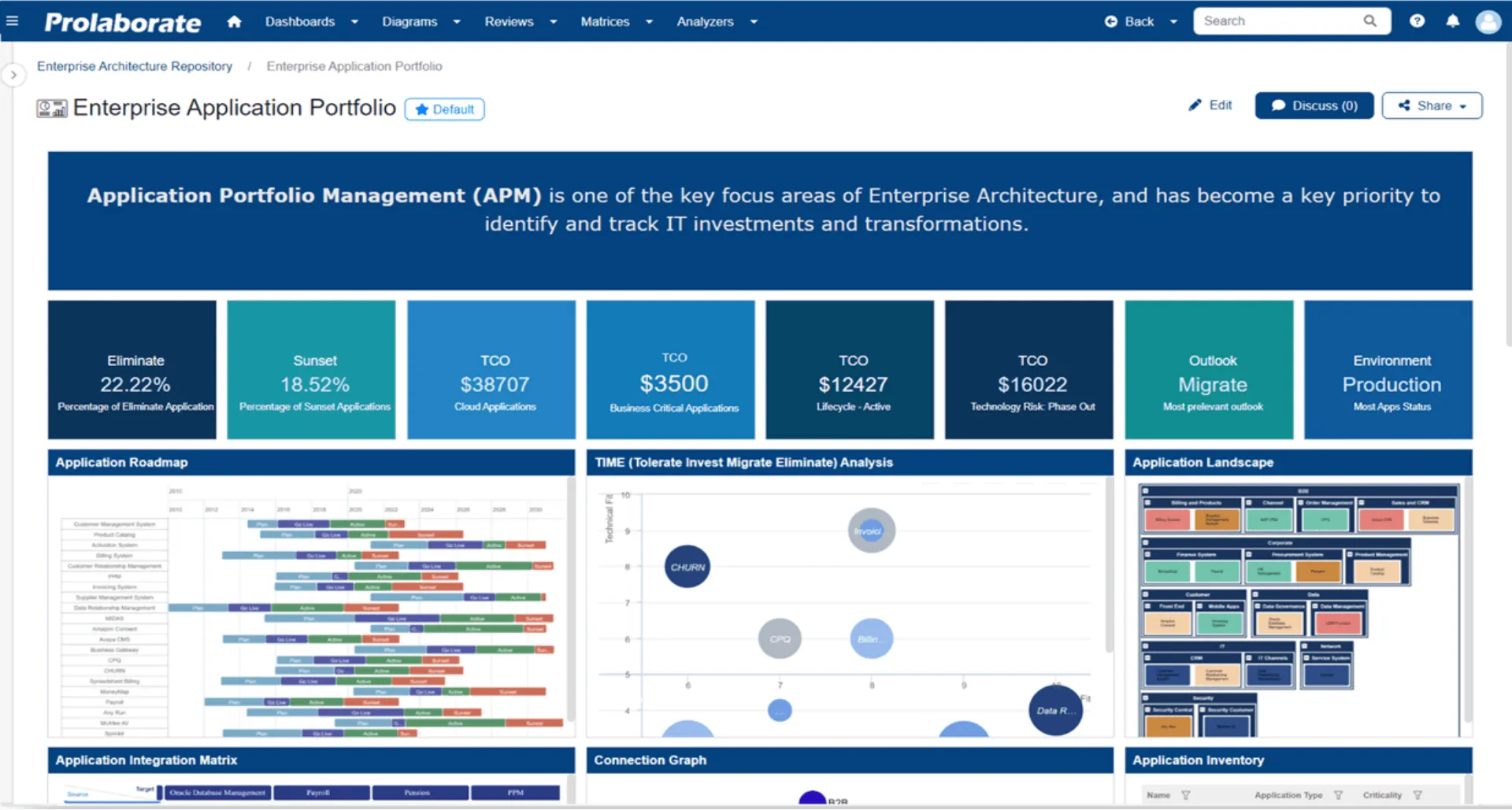
A Sparx Systems Prolaborate dashboard bringing lifecycle roadmaps, bubble charts and landscape views into a focused stakeholder view.
Prolaborate provides tailored views, dashboards and review capabilities around EA information, helping architecture teams present selected model information in a form suited to the people participating in the discussion.
Build Confidence Across Your Enterprise Architect Team
Whether your team is new to Sparx EA or looking to strengthen existing practices, our dedicated training programme can help work more consistently with the platform and apply its capabilities more effectively.
Extend Your Architecture Practice for Broader Participation
As architecture practices develop, more teams and stakeholders may become involved in modelling, reviewing and using architecture information. What begins with a smaller group of specialists can gradually become a shared organisational activity.
At that stage, authoring, repository access and stakeholder collaboration need to work together more consistently. Without a coordinated approach, different groups can end up interacting with architecture information in separate ways, making participation harder to manage as adoption grows.
A well-supported environment can make it easier for architects and stakeholders to work around the same architecture knowledge while supporting the different ways they need to participate. This creates a stronger foundation for expanding adoption without losing visibility or consistency.
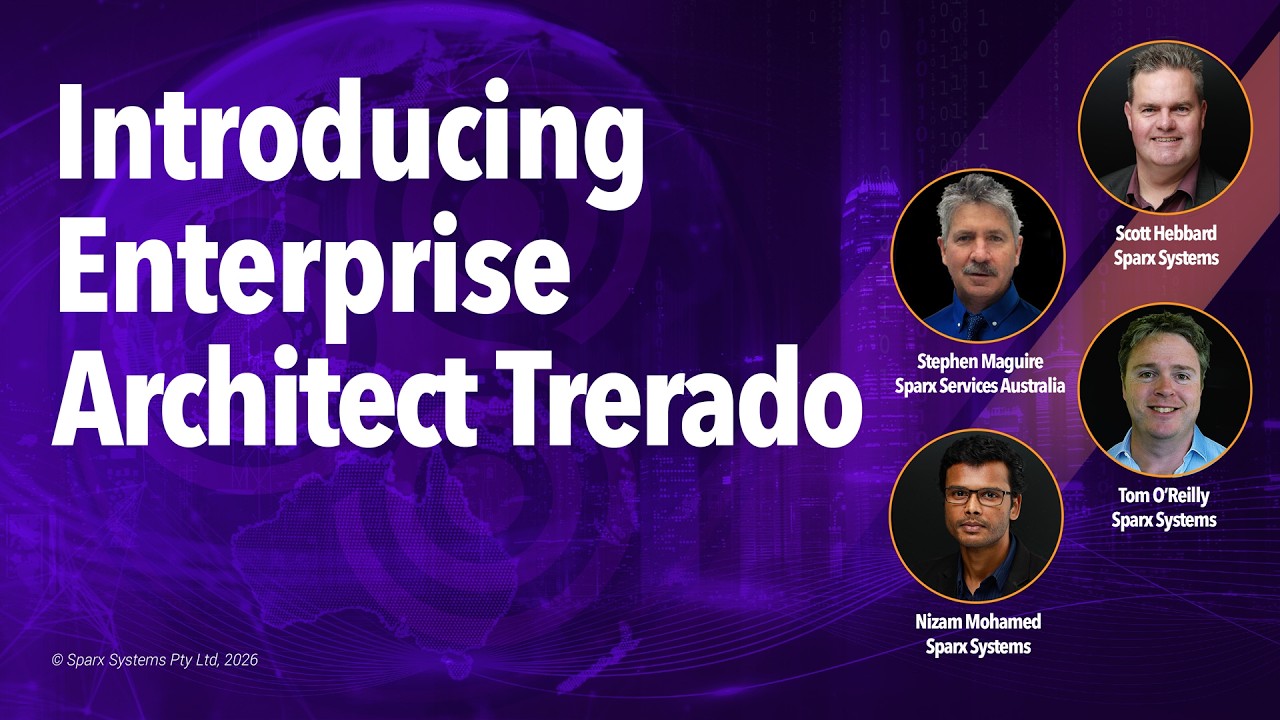
Trerado brings together Designer, Core and Collaborator, drawing on Enterprise Architect, Pro Cloud Server and Prolaborate as part of a coordinated platform offering for organisations considering broader participation in their architecture practice.
Take the Next Step in Your Architecture Practice
An assessment of your current Sparx Enterprise Architect environment can start with one audience, one decision and one representative model area. Use a representative scenario to understand what information people need, how easily they can work with it and where a better experience could support a more informed discussion.
The goal is not to change everything at once. Start with a focused use case, demonstrate how architecture knowledge can support the decision more effectively, gather feedback and build from there as your architecture practice develops.
Let’s Explore What Comes Next
If you would like to discuss your current usage, challenges or opportunities, our Malaysia team is available to explore what would make the most sense for your organisation.